
How to Search Criminal Dockets
Need a hearing date? Begin with the official Lee Docket List, which comes preset to Lee County. Want a fuller event history or a document image? Turn to Just One Look for case-by-case access, or use Alacourt.com with a subscription. Both services can charge fees. AlaFile is different. It accepts filings and service documents for court staff to process. It is not a public lookup.
Type the case number exactly as printed. Know whether the matter sits in Circuit Criminal, District Criminal, or a municipal court. If online results come back empty or muddled, call the matching desk. You can also visit the Circuit Clerk at the T.K. Davis Justice Center, or mail in the official copy form. Lee County's official pages do not confirm public-terminal availability. Phone ahead before making that trip.
- Check the notice, order, or citation for the court and case number.
- Use the LOC=43 list for the relevant docket date.
- Open permitted case detail in Just One Look or Alacourt.
- Read events in date order and locate the latest signed order.
- Ask the clerk for a plain or certified copy when needed.
Lee County Criminal Docket at LOC=43
The location code acts as a guardrail. It keeps your docket search aimed at Lee County Circuit and District settings. It stops short of a complete case file. Fields shown live can vary with each court's configuration. A date search may return the county, court or division, case number, abbreviated case style, time, setting type, and status. Confidential material and some document images stay hidden.
Treat the official Lee-filtered interface as a snapshot of settings. Then match its result against the current criminal case detail and any later order.
What a Criminal Docket Shows
Keep four things separate when you read a Lee County criminal docket: identity, allegations, activity, and outcome. A charge is only an allegation. A motion is only a request. A bond entry speaks to release or custody. No single entry proves a conviction or a final result. Read the latest disposition and sentence entries, then check whether an appeal or post-judgment filing came after them.
| Case identity | Case number, Lee location, court division, case type, filing date, and status. |
|---|---|
| Roles and charge | State as prosecutor, defendant role, charge or offense, and attorneys. |
| Public events | Complaint, warrant return, indictment, plea, motion, order, and continuance. |
| Settings | Arraignment, motion hearing, trial, sentencing, or review dates where shown. |
| Outcome | Dismissal, nolle prosequi, plea, verdict, sentence, costs, and appeal activity. |
| Images | Links to authorized documents when offered; an online image is not automatically certified. |
Lee County Criminal Docket Event Meanings
Three docket entries trip people up because each marks a distinct point in the case. The indictment is the grand jury's charging instrument. The plea is the accused person's formal response. The sentencing order records the court's sentence after a qualifying disposition. Their sequence and dates carry the meaning.
- Motion filed
- A party asked the judge for relief. No ruling is implied.
- Order granted or denied
- The judge ruled on the request. Read the signed order for its terms.
- Nolle prosequi
- A recorded end to prosecution of a charge without the adjudication first sought.
- Disposition
- The recorded outcome, distinct from an active status or an interim setting.
- Notice of appeal
- A filing that seeks review and may create activity in another court.
Bond events sit apart from the outcome too. A change in release conditions describes custody status, not guilt. That line matters most when you are tracking your own Lee County criminal court docket.
Stages on a Criminal Docket
A District Court case often opens with a complaint, warrant, initial appearance, and preliminary hearing. A felony may then be bound over for grand-jury action. It moves to Circuit Court after indictment. That transfer can leave more than one identifier. It can also split the division history. When records look like duplicates, the Circuit Criminal desk can reconcile them.
Docket flow: Filing › Arraignment › Pretrial › Plea or Trial › Disposition › Sentencing
No case hits every step. Motions, continuances, revocation proceedings, and appeals all add entries to the docket. Rule 32 post-conviction petitions are among the filings the current AOC criminal procedures bar from ordinary electronic filing, so their absence from AlaFile flow does not mean no clerk record exists.
Lee County Criminal Docket Divisions
When a felony shows activity in both District and Circuit Court, search each division. District Court typically covers the early misdemeanor stage or the preliminary felony phase. Circuit Court carries the felony prosecution after indictment. Compare case numbers, charge descriptions, and any transfer or bound-over entries. Never assume two results mean two separate proceedings. The official Lee Circuit judge roster adds court-specific context:
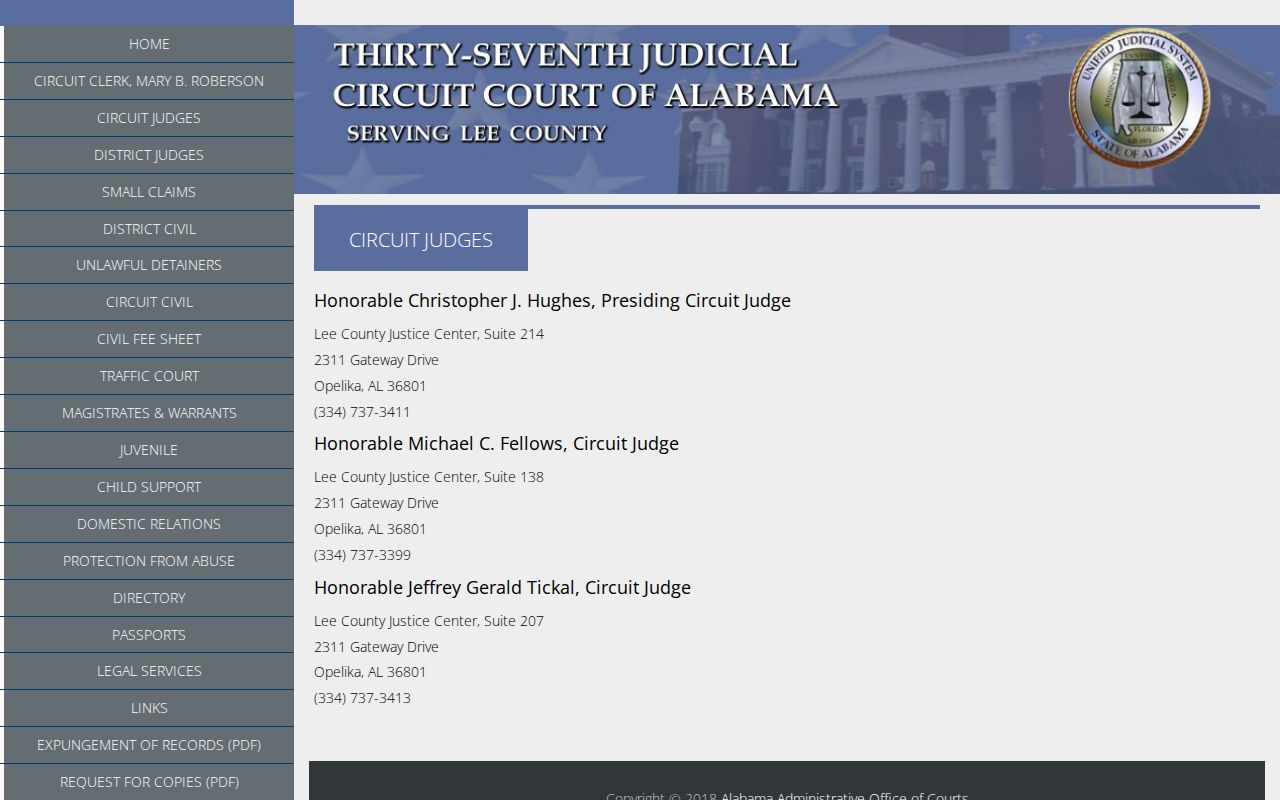
The roster helps confirm the court level. Still, the most recent setting order and the clerk record control the case date and status.
Which Court Holds Criminal Dockets
Felony dockets belong to the Lee County Circuit Court, part of the 37th Judicial Circuit. The Lee County District Court generally handles misdemeanors and preliminary felony proceedings. One office serves both courts. It is the elected Circuit Clerk of Lee County, Mary B. Roberson. That shared custody does not blur the division line.
Auburn and Opelika Municipal Courts each keep their own docket. Their dockets cover ordinance and traffic cases. Those cases do not flow into the county list on their own. A municipal appeal can later open a new Circuit Court docket. It happens under Alabama's trial-de-novo process. Probate and federal matters sit with other offices entirely. The District Court roster shows the lower county court structure:
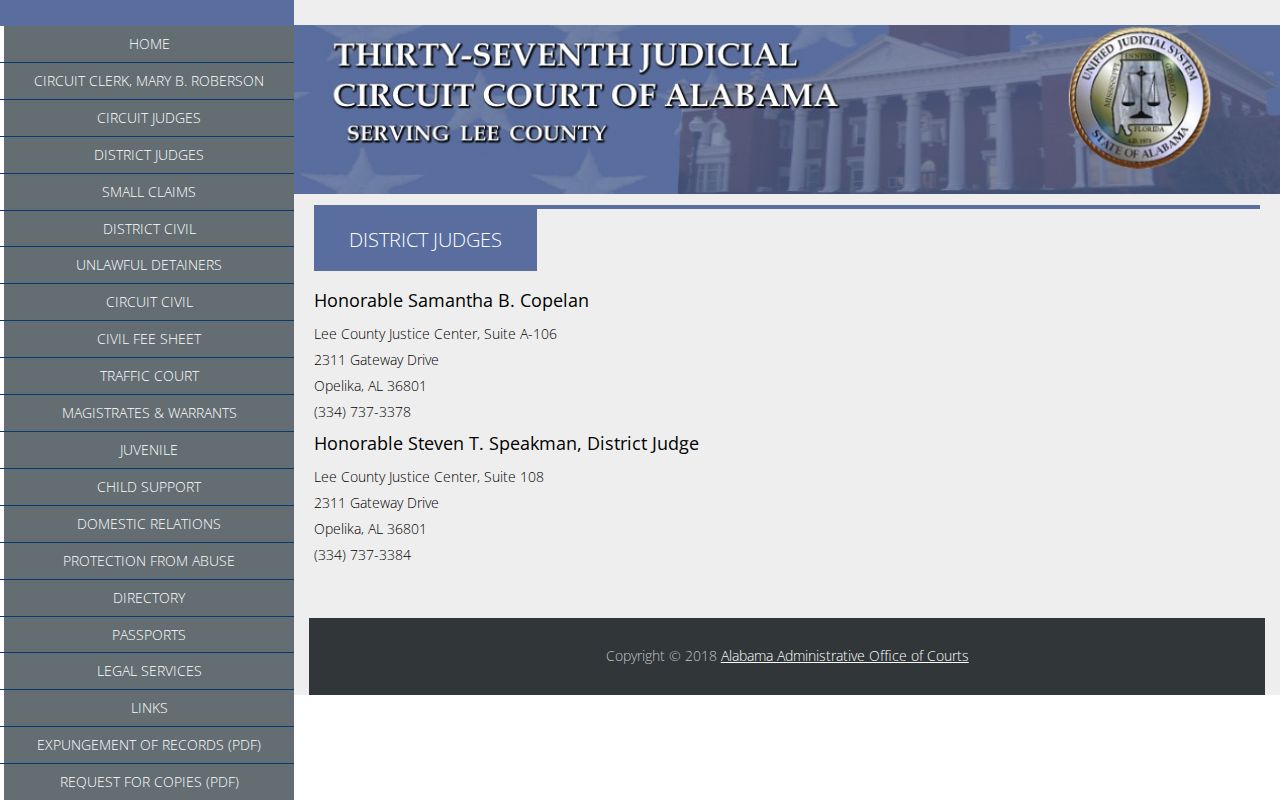
The separate roster is a reminder to check the court level on any notice before you call or search.
Lee County Criminal Docket Desk Routes
Lee County posts direct lines rather than one central switchboard. For a Circuit felony docket, call Circuit Criminal at 334-737-3510 or 334-737-3547. District Criminal and Traffic answers at 334-737-3506. The E-Warrants and Expungements line is 334-737-3501. Juvenile and warrant routing goes through 334-737-3553. The criminal front counter can be reached at 334-737-3518 or 334-737-3504.
Fast routing: State the exact case number, court division, and event or document date before asking the desk to confirm a setting or locate a record.
The clerk's counter sits at 2311 Gateway Drive, Opelika, Alabama 36801. Doors stay open from 8:30 a.m. to 4:30 p.m. Staff there can pull up a Lee County criminal docket, show you the entries, and make copies of any records the law permits, though Alabama rules stop them from advising you on the law itself.
Lee County Criminal Docket Restrictions
Reading the docket is one thing; reading the file behind it is another. Some material stays off limits. Sealed filings, confidential cases, juvenile records, and expunged information can all be withheld. Redaction may black out protected details while the rest of the court record stays public, and a blank result can simply mean you searched the wrong court, hit a municipal office, typed the case number in the wrong format, or reached for older material. The Lee juvenile division page describes a separate access category of its own:
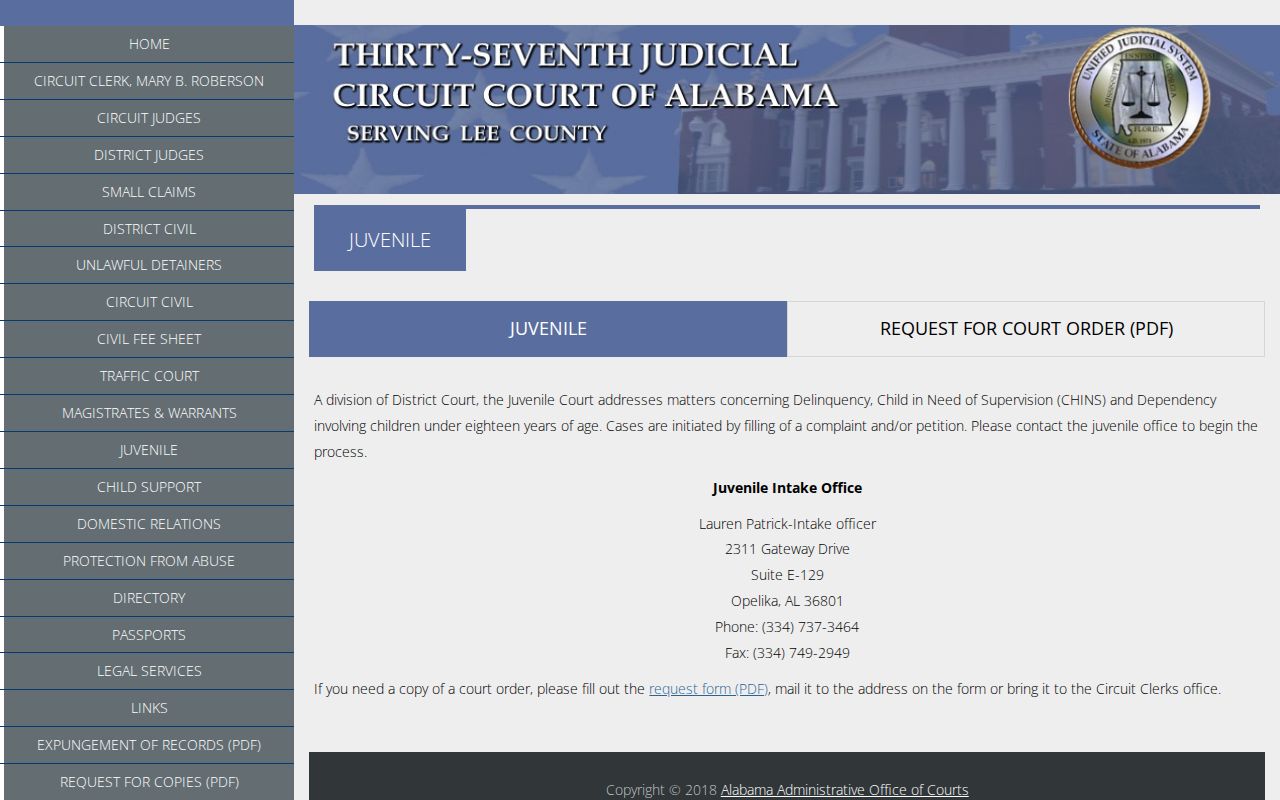
That separate treatment tells you to ask the office holding the file before concluding anything. A blocked view is not proof that no case exists.
Public Access and Sealed Criminal Dockets
Alabama court records answer to judicial control. Court rules and orders issued in a given case govern too. Alabama Code section 36-12-40 grants a general right to inspect and copy public writings, subject to statutory exceptions. Certified copies fall under section 36-12-41. Juvenile legal and social records carry access limits under section 12-15-133. Alabama's expungement laws restrict access once a qualifying order enters.
Key rules:
Alabama Open Records Act guide explains the general public-writing framework, though court files remain under judicial access rules.
Alabama court rules library provides current judicial rules, including electronic filing and retention.
Ask whether a public docket or redacted copy is available when a document itself is restricted.
An online printout is not a certified disposition. If you need the real thing, ask the Circuit Clerk for the specific order or disposition by title and event date. Lee County publishes no plain-copy or certification fee. Get the amount and the turnaround from Records Requests before you pay anything.
Lee County Criminal Docket Dispositions
Use the official copy route whenever you need authenticated proof of how a case came out. Your request should name you as the requester. It should give the case number, the party or case style, the exact document, the copy type and quantity, delivery details, and how you will pay. Ask for the sentencing order or final disposition by its event date. Requesting the entire file is the slower path. Records Requests answers at 334-737-3515. Mail can go to the Circuit Clerk at the T.K. Davis Justice Center. But confirm the current fee, the payee, and the accepted payment method before sending anything. One caution applies. The 1 to 4 business-day target Lee County publishes covers a special media-only workflow, not ordinary public copy orders. So build your timeline around the clerk's answer, not that figure.
Lee County Criminal Docket PFA Routing
Protection-from-abuse cases run through their own named channel in Lee County, and their access limits can differ from an ordinary public criminal docket. The domestic-relations desk routes divorce, child support, and PFA matters at 334-737-3509. Safety-related allegations may surface in the case. That does not make a general criminal search the right place for a PFA records question. The official PFA information page lays out the local forms and the route to use:
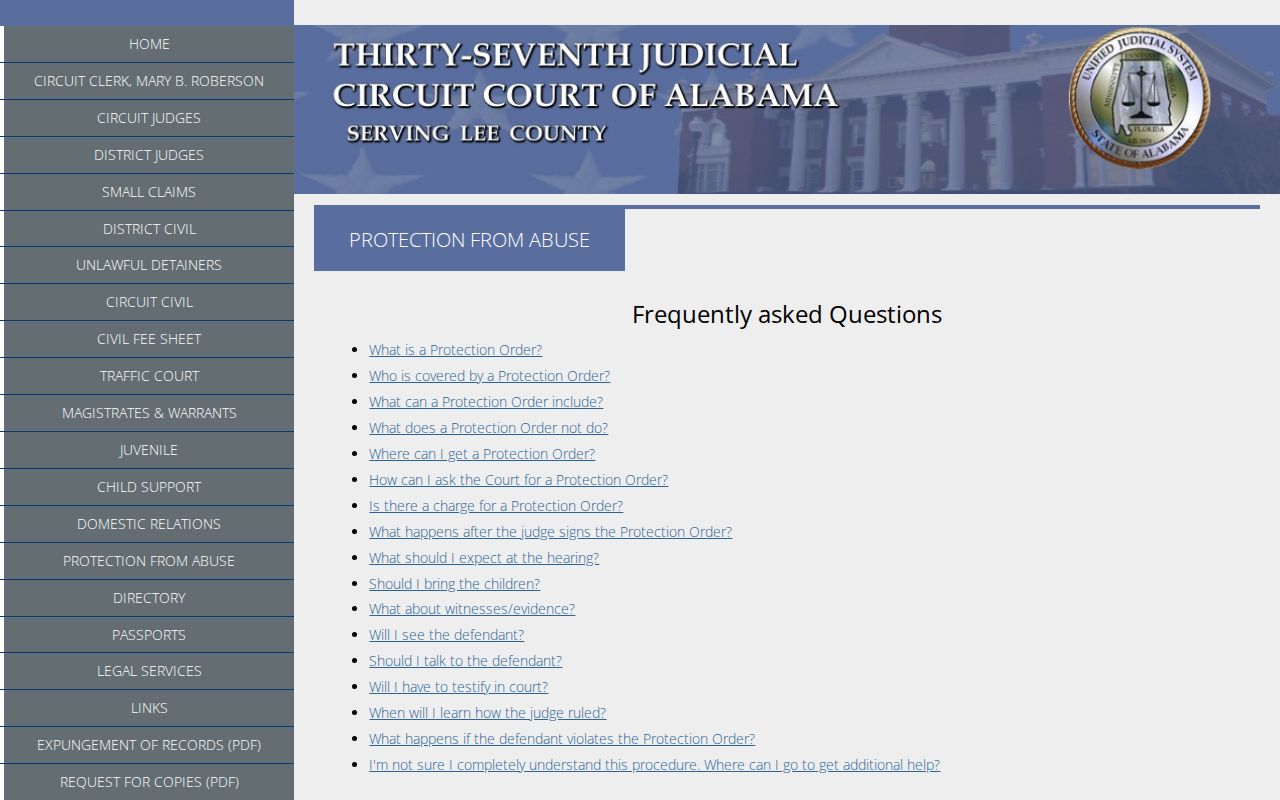
The page confirms the split plainly. Subject and division decide where a record is filed and where access questions go.
Lee County Criminal Docket Confirmation Chain
A safe order of authority works like this. Trust the latest signed setting order or a direct instruction from the court first. Then comes the current case detail, then the live LOC=43 list, and only then any printout you saved earlier. Dates can reset. That usually happens after a motion plus an order. So a motion to continue filed on its own moves nothing.
What if a result vanishes? Check the case number and the court. See whether the case moved from District to Circuit, and call the right criminal desk. When the public online channel cannot show the permissible record, go to the counter or send the copy form. The distinction matters: a calendar aid is one thing, the court's authenticated file another.
Note: Municipal, juvenile, sealed, and expunged matters may sit with a different custodian. They may also follow a different access procedure, even when the online county search comes back blank.