
How to Search Civil Dockets
The official Lee Docket List covers Circuit and District civil settings, with location code 43. Case history and images run through paid Just One Look access or a subscription Alacourt account. AlaFile exists for registered filers using electronic service. It is not a free public search.
Online is only one route. You can call the civil desk, visit the Circuit Clerk at 2311 Gateway Drive in Opelika, or mail the official copy form. Call ahead about lobby terminal access. Have the full case number with its punctuation, party roles, division, and an event date ready.
- Identify Circuit Civil, District Civil, Small Claims, Domestic Relations, or Probate.
- Check the LOC=43 calendar for the setting date.
- Use Just One Look or Alacourt for permitted case detail.
- Read service, motions, orders, and judgment in date order.
- Call the right desk or request the named record when an image is absent.
Lee County Civil Docket Codes
Alabama division codes route Lee County civil dockets. CV marks Circuit Civil, the higher civil jurisdiction. DV marks District Civil. SM marks Small Claims, a simplified District Court category. Domestic-relations files sit in their own assigned division and can carry access limits an ordinary contract case never would.
- CV
- Lee County Circuit Civil matters and filings assigned by law to Circuit Court.
- DV
- Lee County District Civil matters, including the lower civil jurisdiction.
- SM
- Small Claims cases kept by the Circuit Clerk as a District Court category.
- Garnishment
- A post-judgment collection process that creates new civil docket entries.
- Service or return
- The event that records delivery or attempted delivery of court process.
Keep the code and case-number punctuation intact. A matching party name in a different division proves nothing about whether two entries belong to the same dispute.
What a Civil Docket Shows
The header of a Lee County civil docket gives you the case number, court and division, abbreviated case style, filed date, case type, status, parties with their roles, and attorneys. Below it runs the event list. There you may find the complaint, summons, service return, answer, motions, setting notices, orders, dismissal, trial, judgment, and post-judgment filings. One caution applies here. An entry saying an order was filed is only an index line. The order's own text tells you what the judge required.
| Identity | Case number, Lee County location, civil division, filed date, and status. |
|---|---|
| Case style | Abbreviated party caption with plaintiff, petitioner, defendant, or respondent roles. |
| Service | Summons issued, delivery attempt, completed return, or other process event. |
| Pleadings | Complaint, petition, answer, counterclaim, and filed motions. |
| Settings and orders | Hearing notices, continuances, mediation, rulings, and signed orders. |
| Outcome | Dismissal, settlement entry, default, trial judgment, appeal, or collection activity. |
Lee County Civil Court Divisions
Circuit Civil and District Civil share one elected Circuit Clerk. The divisions still run separate work. Each has its own direct line. Circuit Civil takes the major civil matters and Circuit filings. District Civil handles its own jurisdiction, unlawful detainers included. Check current thresholds and fees on the local court pages. Don't rely on an old summary.
The official Circuit Civil page lays out the county's higher-court filing context:
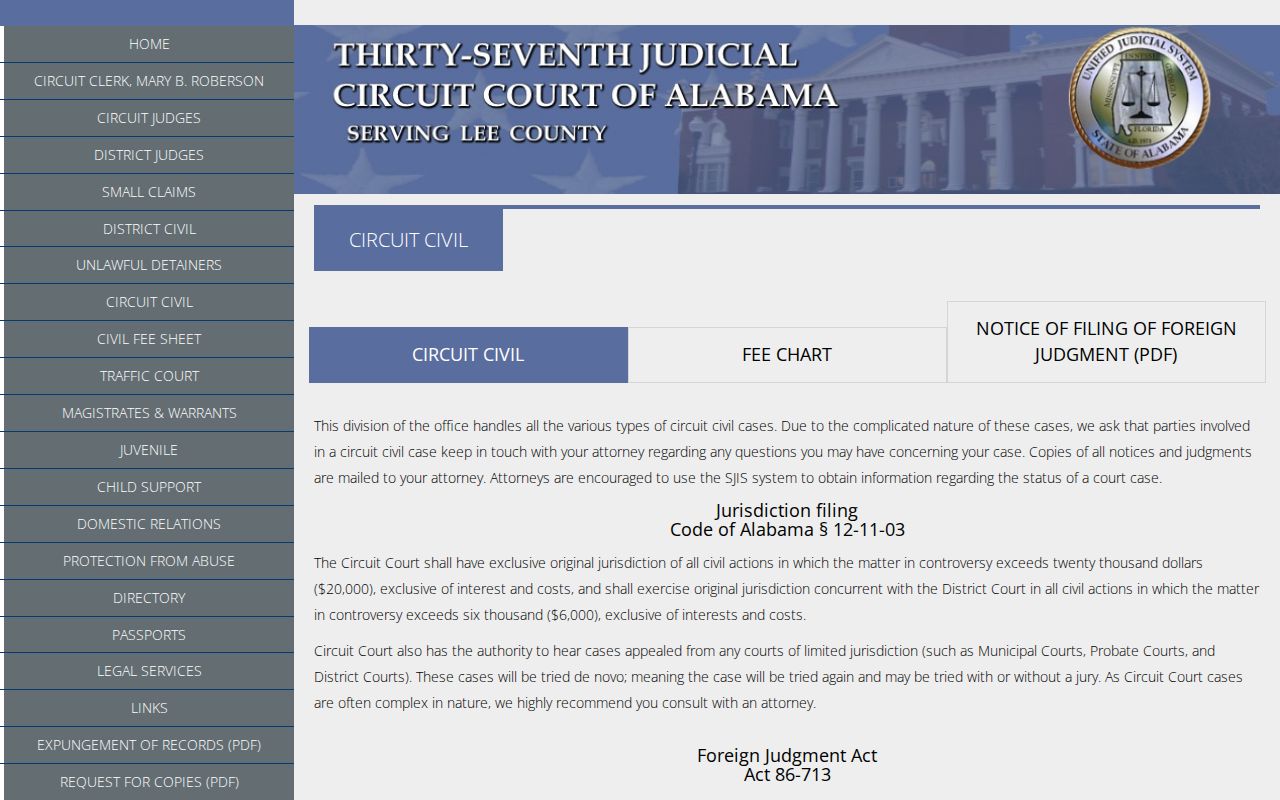
That page helps you place a case in Circuit Court before any docket search or clerk request.
The official District Civil page covers the lower-court route:
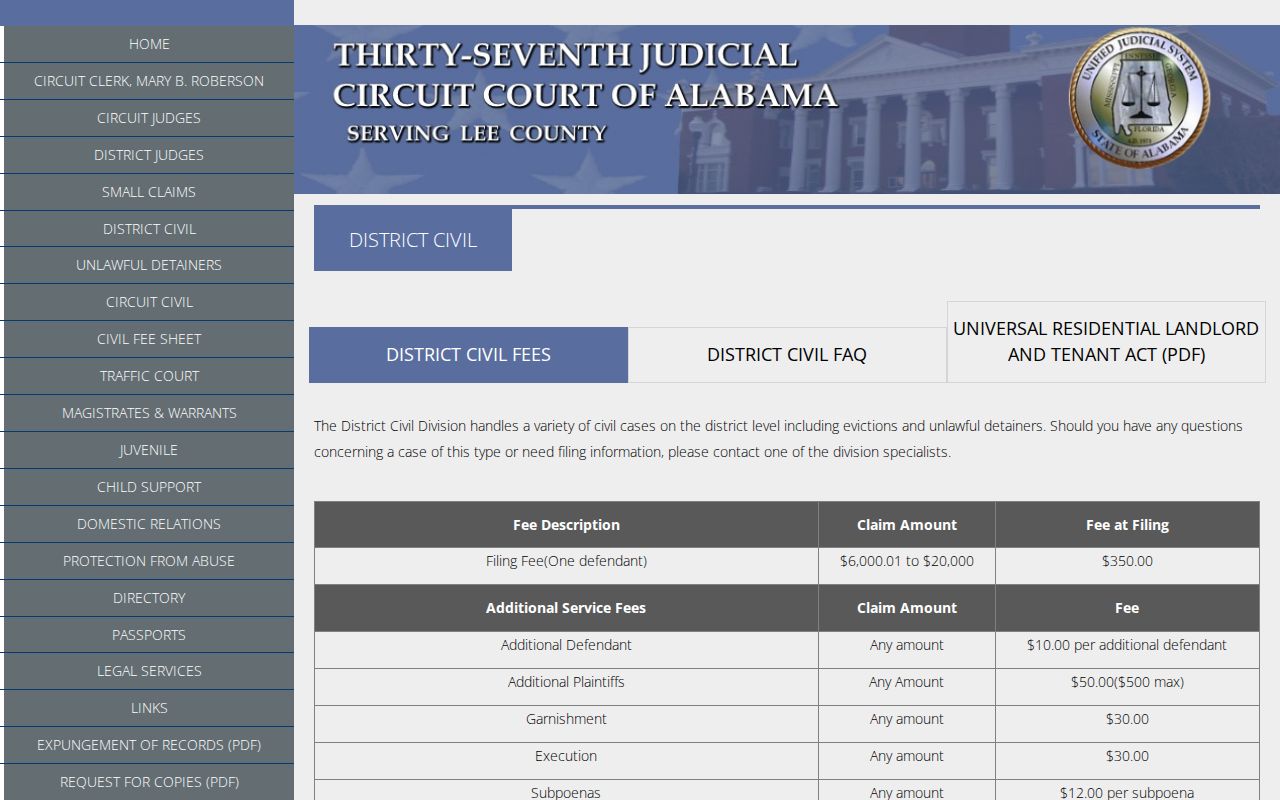
Read together, the two pages show why a party name alone cannot pick the correct civil division.
Types of Civil Cases on the Docket
Lee County's unified office keeps the Circuit Civil, District Civil, small-claims, eviction, domestic-relations, child-support, protection-from-abuse, and garnishment dockets. Probate sits outside that unified clerk. The case subject and the court's jurisdiction decide the division. No separate elected civil clerk exists.
| Civil channel | Contact | Best use |
|---|---|---|
| Circuit Civil | 334-737-3513 | Major civil and Circuit filings |
| District Civil and Evictions | 334-737-3532 | District claims and unlawful detainers |
| Small Claims and Records | 334-737-3515 | Small claims and copy requests |
| Domestic Relations | 334-737-3509 | Divorce, support, and PFA routing |
| Garnishments | 334-737-3516 | Post-judgment process |
| Probate | Judge of Probate | Estates and guardianships |
Lee County Civil Docket Small Claims
Small Claims is a Lee County District Court docket. It is not a municipal-court record. For docket and copy questions, call the Small Claims and Records Requests line. That number is 334-737-3515. A small-claims register can show filing, service, response, setting, judgment, and collection events. The chronology works like any other civil file.
The Lee County small-claims instructions hold the current local filing guidance:
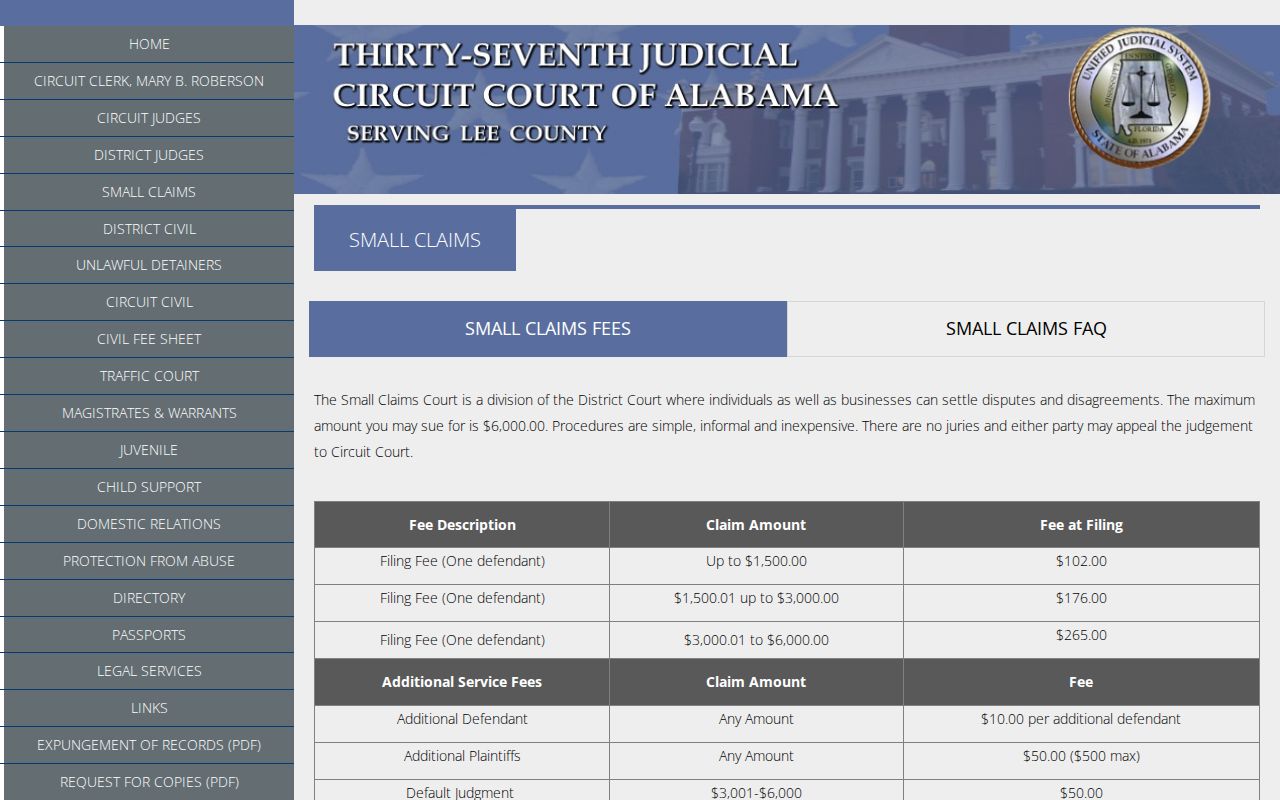
For current limits and procedure, those instructions beat any uncited number saved elsewhere.
Settings and Hearings on Civil Dockets
A civil setting can take many forms. It may be a motion hearing, status conference, mediation-related setting, default or damages hearing, small-claims trial, eviction setting, bench trial, or jury trial. Read the exact label. A setting is never a final judgment. A filed request tells you nothing about whether the judge granted it.
Confirm any date against the latest signed order first, then the current case detail and the live Docket List. A saved daily list can go stale after a reset. If a date conflicts with a notice, call the right desk: Circuit Civil, District Civil and Evictions, or Small Claims. Represented parties should also tell their counsel.
Note: A motion to continue does not move a Lee County civil hearing. The court must enter an order changing the setting.
Lee County Civil Docket Service
Check service before hunting for a judgment. The complaint starts the case. The return entry then shows whether process was actually delivered or merely attempted. An answer is the responding party's formal pleading. A motion requests action, and only an order carries the ruling. This sequence matters most when a default-related entry appears on the docket.
Default is a sequence: A default entry and a default judgment can be separate events. Read the later order rather than treating either label as self-explanatory.
A Lee County civil docket can also show a dismissal without enough detail to explain its effect. When the terms matter, get the dismissal order itself.
Lee County Civil Docket Transfers
Cases move around. A transfer, a consolidation, or an appeal can spawn a fresh docket or a linked case number. Check both the sending court and the receiving one whenever a notice hints that a matter shifted. Under Alabama procedure, appeals out of District or Municipal court can show up later. They land as Circuit activity. Lay the transfer entry, the new number, and the case style side by side. Make sure they tell one story.
Garnishment keeps a record alive after judgment. Treat it as a post-judgment step, not a new finding on the original claims. The civil front counter and garnishment line, 334-737-3516, can route you. If no image appears online, request the transfer order, judgment, or garnishment filing by title and date.
Public Access to Civil Dockets
Access rests on judicial control plus Alabama court rules, statutes, and orders. Alabama Code section 36-12-40 gives the public a general right to inspect and copy public writings, with exceptions. Section 36-12-41 covers certified copies. Public does not mean unredacted. Protected addresses, sealed papers, adoption-related records, juvenile material, and similar confidential details may be withheld or masked in a Lee County civil docket.
The Attorney General's Open Records Act guide lays out the general framework. But send any case-file request to the Circuit Clerk under judicial access procedures. If a full document is off limits, ask the clerk. A redacted docket or copy may be released instead.
Lee County Civil Docket Domestic Access
Domestic-relations files are civil cases. Access can look different from ordinary contract litigation because the record may hold protected family information. In the Lee directory, divorce, child support, and PFA matters have a dedicated line: 334-737-3509. A missing online image proves nothing about whether a filing exists. The official Domestic Relations page names the local division:
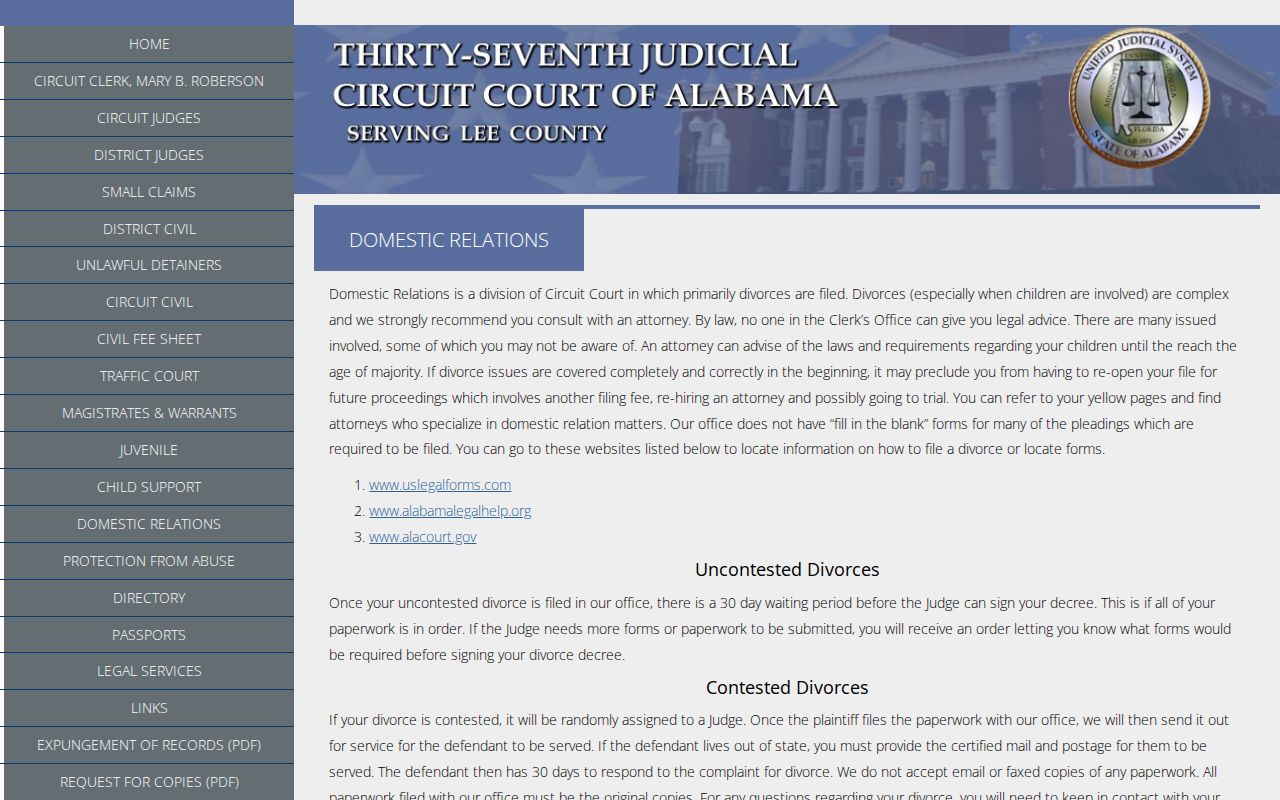
That division page helps steer a records question to the right Lee County desk. Never assume a general public portal will display every domestic filing.
Lee County Civil Docket Filing Fees
Fees depend on the type of civil case, and they change. Check the official Lee County fee sheet at the time you file. Copy charges differ too. Online Alacourt or Just One Look prices are not clerk prices for plain or certified copies. The clerk posts no full copy-fee schedule, so ask Records Requests for a quote. The official civil fee sheet is the county source:
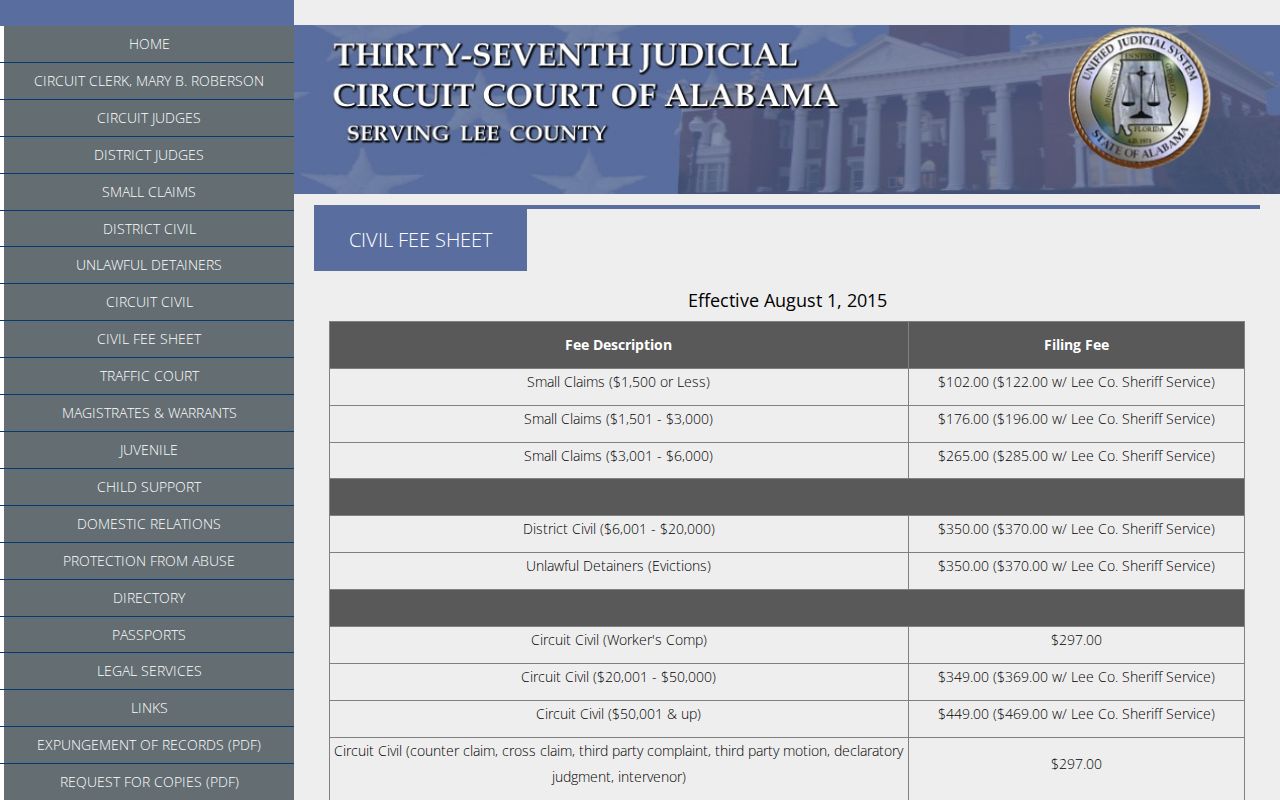
The sheet covers filing costs only. It is not proof of what an online case view or certified record costs today.
Lee County Civil Docket Requests
Ask for one identified document at a time. Start by pinning down the exact Lee County case number and division, then use the docket to find the event date and document title. Next, call the right civil desk. Records Requests is at 334-737-3515. Say plainly whether you want a plain or certified copy. Before any money moves, confirm the price, payee, delivery method, and turnaround.
The official copy form asks for requester contact details, case identification, a document description, copy type and quantity, delivery details, and payment arrangement. Lee County's media form is for media requests. Its 1 to 4 business-day target does not apply to ordinary requests. A transcript is a separate animal entirely. It stays with the assigned court reporter rather than the clerk's docket-copy process.
Note: Probate estates and guardianships belong to the Lee County Probate Office. They do not go to Circuit Civil or District Civil.