
How to Get Court Records
Pin down the case number and court first. The Lee Docket List can identify a setting. Paid Just One Look or subscription Alacourt goes further. It shows permitted case detail and any available images. If no image appears, contact the Circuit Clerk division that holds the file. The official copy form covers mailed or clerk-handled requests. Telephone questions and in-person inspection start at the proper division desk.
Lee County posts no free public lobby terminal on its official pages. Call before you travel. A general Alabama Open Records Act request does not override judicial control of an adjudicative file. Ask the clerk for court records. City administrative records can follow a city request system. Municipal court files remain with municipal court staff.
- Find the court and exact case number.
- Use the docket or case detail to identify a document by title and date.
- Check whether an authorized image is available online.
- Call Records Request or the correct division when it is not.
- State plain or certified copy, quantity, and delivery preference.
- Confirm cost, payee, method, and turnaround before sending payment.
- Ask what authorization applies to restricted material.
Lee County Court Records Desk
Mary B. Roberson serves as Circuit Clerk of Lee County. One office holds both Circuit and District Court files. Its directory, though, routes calls by subject. Small Claims and Records Requests is 334-737-3515. Circuit Civil is 334-737-3513. District Civil and Evictions is 334-737-3532, District Criminal and Traffic is 334-737-3506, and Circuit Criminal is 334-737-3510 or 334-737-3547. The official clerk directory lists current division lines. Staff can locate, display, and copy records, but Alabama law bars them from giving legal advice or interpreting the legal effect of an order.
T.K. Davis Justice Center
2311 Gateway Drive, Opelika, AL 36801
334-737-3526
8:30 a.m. to 4:30 p.m.
Types of Court Records
Lee County court records run from the docket index to the documents filed behind it. A civil file may hold a complaint, answer, service return, motion, order, judgment, or garnishment. A criminal file may hold a complaint or indictment, plea, setting notice, order, disposition, and sentence where public. Transcripts are different. The court reporter prepares them rather than the clerk copying a docket sheet. Exhibits from trial or hearing can require special handling. Alabama e-filing procedures exclude some exhibits and objects that cannot be scanned. Probate estates and guardianships belong to the Judge of Probate. Auburn and Opelika municipal clerks retain their own city matters.
- Docket or chronological case history
- Filed pleading, motion, or response
- Judge's order or final judgment
- Clerk-authenticated certified copy
- Court-reporter transcript
- Exhibit held under court procedures
Lee County Court Record Documents
A docket entry is an index event. It may record that a motion, order, or judgment was filed, but it does not reproduce the document's terms. An online image shows the filed item where the system permits access. A certified copy bears the clerk's authentication. Use that version where official proof is required.
| Record | What it supplies | Custodian or channel |
|---|---|---|
| Docket | Chronological event history and settings | Circuit Clerk and Alacourt environment |
| Document image | Text of a filing or order when available | Alacourt or clerk copy request |
| Certified copy | Clerk-authenticated reproduction | Circuit Clerk |
| Transcript | Proceeding record prepared separately | Assigned court reporter |
Choose the narrowest item that meets your need. Naming one order by its event date can cut search time and help the clerk quote a cost.
What a Court Record Contains
Contents vary by division and document. The docket header and chronological register identify what to request in a Lee County case. A record can carry role-labeled names and case allegations that have not been proved. Read the disposition and signed rulings rather than inferring an outcome from the filing alone.
| Case identity | Case number, Lee County location, court, division, type, filed date, and status |
|---|---|
| Caption and roles | Case style, role-labeled parties, and attorneys where public |
| Chronology | Filings, service, motions, orders, settings, resets, judgment, and appeal events |
| Subject details | Public charge or civil claim category, depending on case type |
| Financial fields | Permitted costs, balances, or post-judgment events |
| Image links | Available electronic documents subject to access controls and charges |
This field-set printout is not automatically certified. Ask for certification expressly when you need authentication.
Lee County Court Record Requests
The official Lee County copy form gathers requester contact details, the case number, party or style identification, a document description, copy type and quantity, delivery details, and payment arrangements. Some unmarked fields may be required. Check the live form before submitting. Mail goes to the Circuit Clerk at 2311 Gateway Drive, Opelika, AL 36801. Confirm the payee and accepted payment type first. The no-personal-check rule on Lee's traffic page covers mailed traffic payments only. It should not be stretched to all copy orders. No official Lee source promises a set turnaround on an ordinary public copy request. Ask Records Request at 334-737-3515.
Certified Copies and Fees
Lee County official sources publish no complete current fee schedule for plain, certified, or exemplified court-record copies. That gap is real. Alacourt charges are separate. Subscription or case access fees sit apart from a clerk's certification charge, and a transcript quote comes from the court reporter through a different process.
| Requested item | Source | Verified condition |
|---|---|---|
| Daily docket or calendar | Lee Docket List | No price displayed on the linked page |
| Case detail | Just One Look or Alacourt | Case charge or subscription; verify live amount |
| Available image | Alacourt | Access or printing charge may apply |
| Plain clerk copy | Circuit Clerk | Current Lee fee not located |
| Certified or exemplified copy | Circuit Clerk | Current Lee fee not located |
| Transcript | Court reporter | Quote required |
Ask the clerk to state the total before payment. A subscription printout and a certified clerk copy are different products, with different keepers and different purposes.
Lee County Court Records Media Form
The Lee clerk offers a media-only request process. It collects the media organization, requester identity, contact details, case information, and the documents sought. Staff redact and scan permitted documents into the court file, after which the requester views or prints through Alacourt and pays the related charges. The stated one-to-four-business-day target applies to that media workflow. It may be extended. That target is not a guaranteed turnaround for an ordinary Lee County court-record request. Members of the public should not claim media status. Use the copy form or the Records Request desk instead.
Public Access and Sealed Records
Two Alabama statutes anchor public access to government writings. Alabama Code §36-12-40 covers public writings, and §36-12-41 covers certified copies. Court records are different. Judicial files still answer to court rules, confidentiality statutes, and sealing orders. Juvenile legal and social files carry access limits under §12-15-133. Records identifying an Adult in Need of Protective Services stay closed under §38-9-6(e), and sealed or expunged material follows its own authority.
For a state-level overview, the Alabama Attorney General's Open Records Act guide is the place to start. A specific Lee County case file, though, goes through the clerk and the court's own request process. If only part of a record is protected, ask whether the clerk can provide a redacted copy.
Lee County Older Court Records
Old Lee County court records do not always sit in a tidy digital file. Some remain on paper, and others must be scanned only after someone asks. Alabama Rule of Judicial Administration 30 sets the retention and disposition framework. Retention does not promise an online image for every item kept. When you contact the clerk, give the case number, the approximate year, the court, the division, and the document you want.
It helps to ask what is actually delaying things. An archive location problem and a restricted-access problem are not the same. Probate archives stay with the Probate Office. A transfer or appeal can open a second docket at another court level. The official Alabama rules library carries the current text of the judicial rules.
Lee County Court Record Exhibits
A docket entry has its limits. It may note that an exhibit was offered or that a hearing took place without putting the exhibit or transcript online. Alabama's electronic-filing procedures leave out trial and hearing exhibits. Anything that cannot be scanned in the ordinary way is left out too. So ask the clerk, or the assigned court reporter, who actually holds the item.
A transcript request needs three details: the judge, the proceeding date, and the case number. Get a quote from the court reporter directly. Her price and preparation time are separate from the clerk's copy fee. For an exhibit, ask whether inspection or copying is permitted. Ask whether a court order controls access.
Lee County Separate Record Custodians
Not every Lee County record request belongs with the Circuit Clerk. The Judge of Probate keeps estate, guardianship, adoption, and probate matters. Auburn and Opelika each have their own municipal clerks. Those offices hold their cities' ordinance and traffic cases. A city public-record form will not pull up a municipal court calendar. The court named on the citation or pleading is the right first contact.
State and federal files are separate worlds. Lee County sits inside the U.S. District Court for the Middle District of Alabama. Federal civil and criminal dockets run through PACER. Federal bankruptcy goes through the Middle District Bankruptcy Court's system.
Lee County Federal Court Records
The U.S. District Court for the Middle District of Alabama is the official source for federal trial records touching Lee County. That court's own pages show its divisions, judges, and filing systems. A case does not land in Alacourt just because a party or event has a Lee County connection.
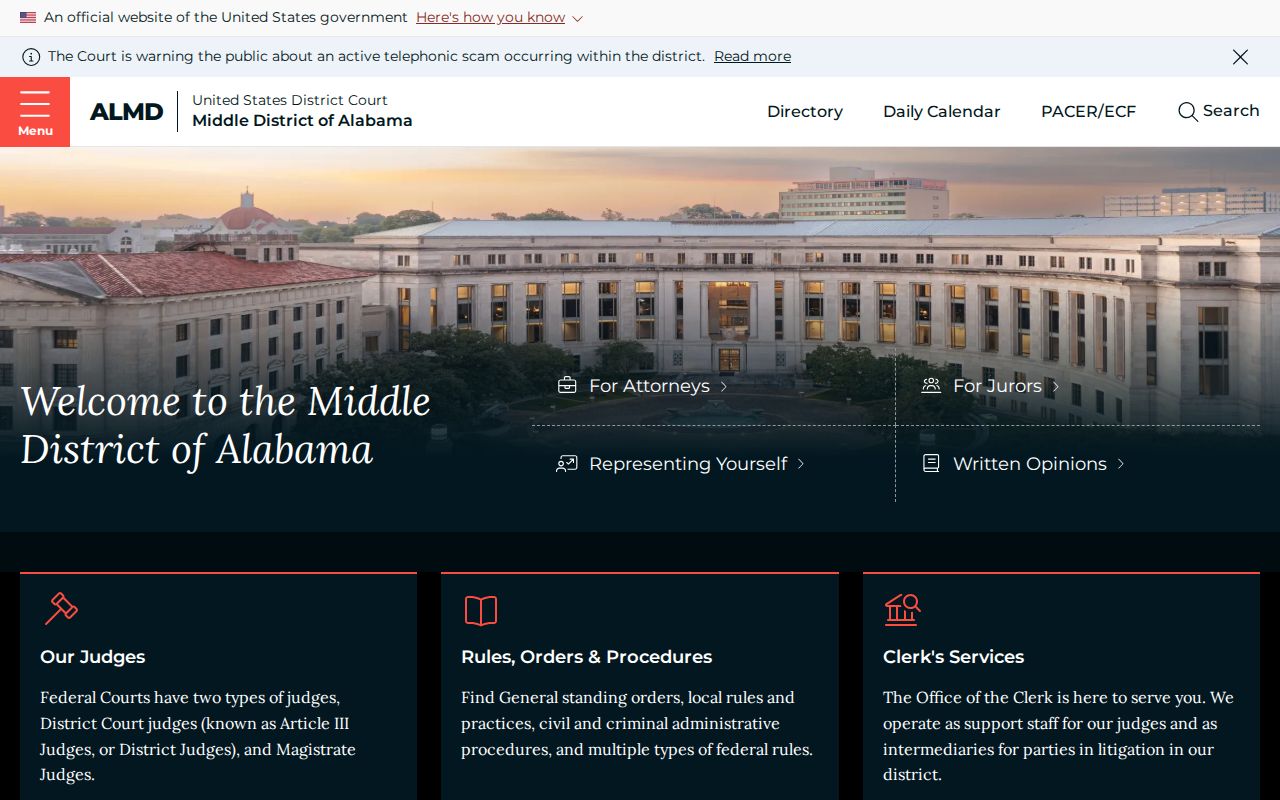
The line here is jurisdictional. Alabama trial records and federal court records live in separate systems, and the court's page makes that split plain. PACER is the federal account-based docket and document service.
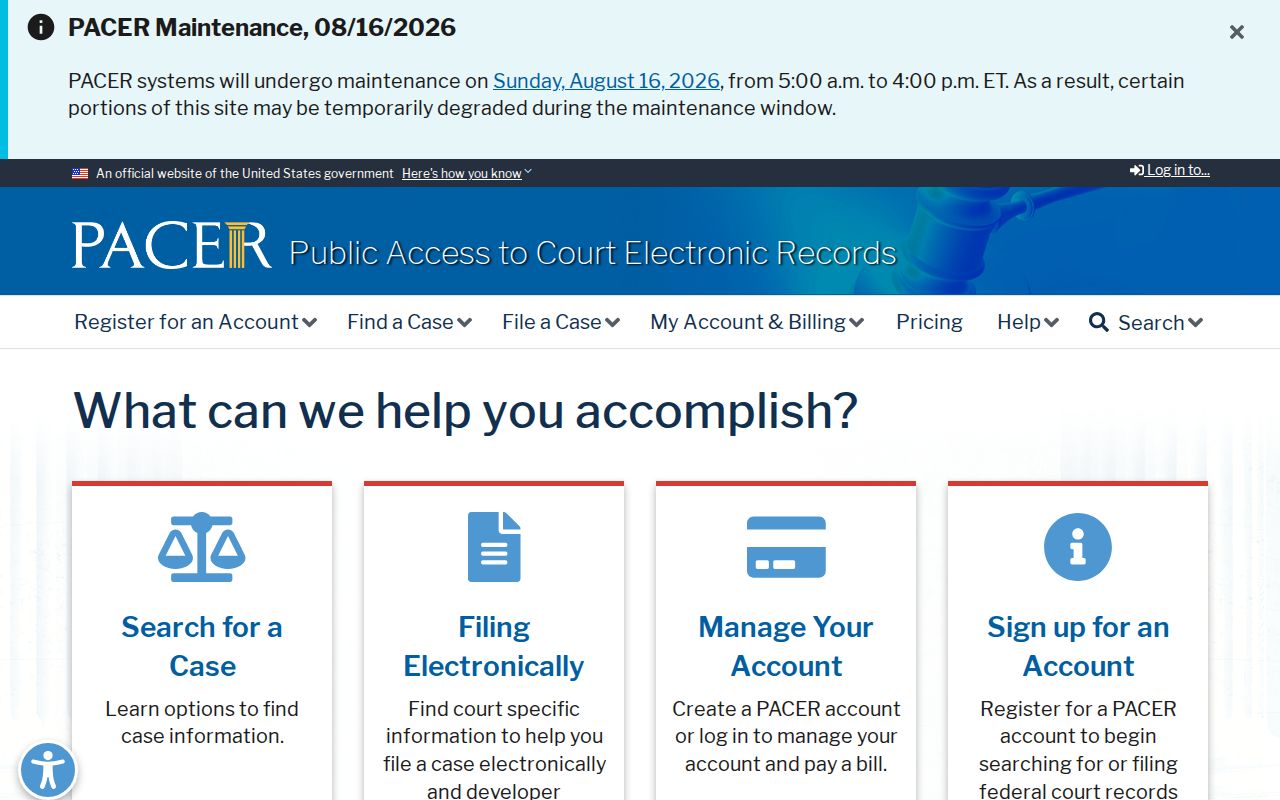
For a known federal case, PACER is the correct primary search. A contributed RECAP copy can help, but it is neither complete nor certified.
Lee County Record Verification
The Alabama Administrative Office of Courts warns that web information can change. It may lag as well. Treat online data as a way to locate a case. Use it to spot an event. Then get the exact document. Before the request begins, the Lee County case search page walks through a case-search workflow.
For proof that carries weight, ask the originating clerk for a certified copy. Name the exact order, judgment, disposition, or other item you need. Confirm the current access rules first. Check the charges and delivery terms at the time of the request.